Apple AHMS Biosignal Foundation Models (PPG & ECG)
Self-supervised foundation models for wearable PPG and ECG signals, trained with contrastive learning on Apple Heart and Movement Study recordings.
Released: December 2023
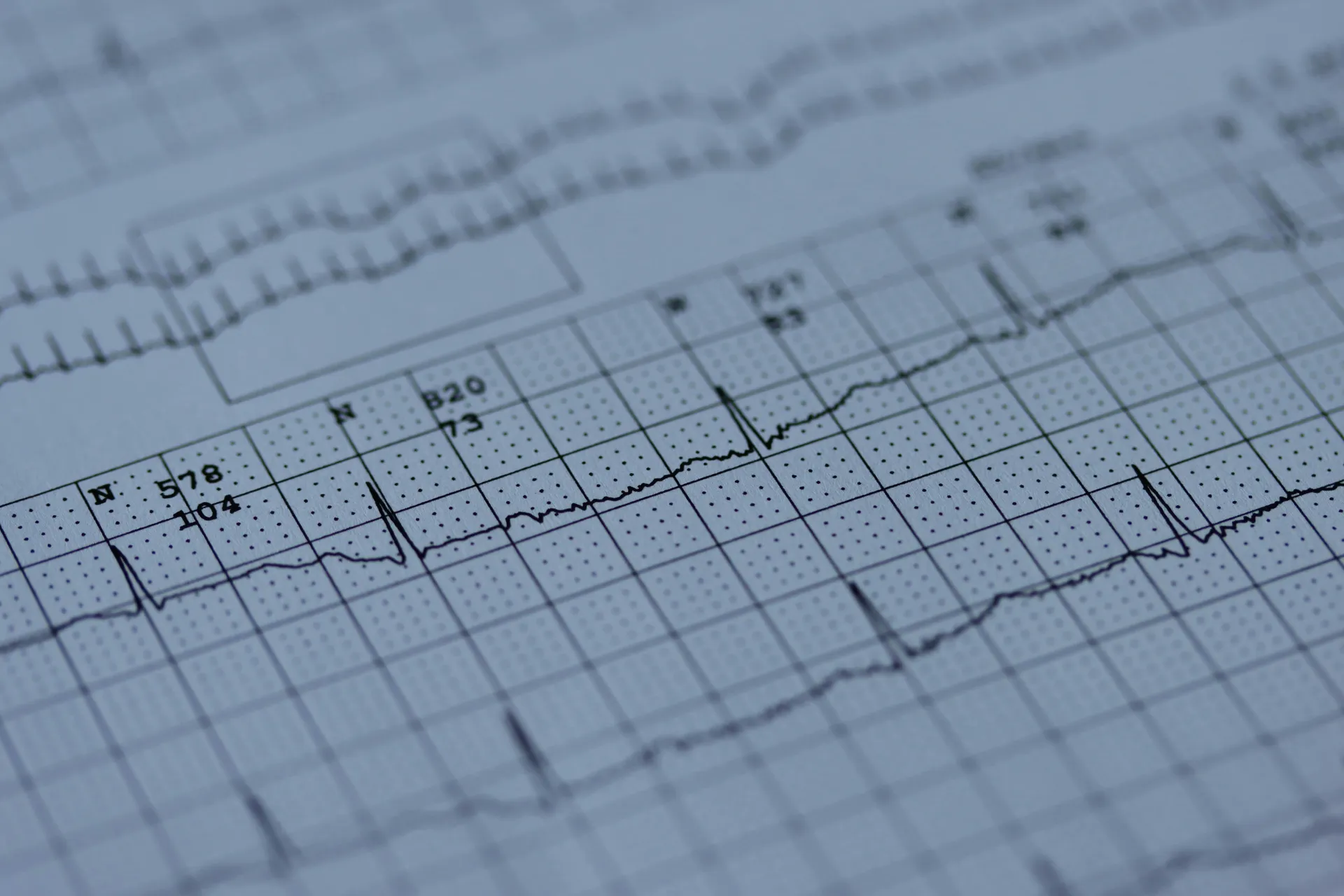
Wearable devices such as the Apple Watch continuously record physiological signals — most prominently photoplethysmography (PPG) from the optical heart sensor and electrocardiograms (ECG) from on-demand recordings — but the medical labels needed to train supervised models on this data are scarce, expensive, and biased toward people who already have a diagnosis. Apple's AHMS biosignal foundation models address this gap by learning general-purpose representations of PPG and ECG signals through self-supervised contrastive learning, so that downstream health tasks can be solved from frozen embeddings rather than from large labeled datasets.
Introduced by Salar Abbaspourazad, Oussama Elachqar, Andrew C. Miller, Saba Emrani, Udhyakumar Nallasamy, and Ian Shapiro of Apple, and published at ICLR 2024, the work trains separate foundation models for PPG and for ECG on data from roughly 141,000 participants of the Apple Heart and Movement Study (AHMS), collected over approximately three years. The authors describe it as the first study to build foundation models from large-scale PPG and ECG data captured by consumer wearables, as opposed to clinical-grade equipment in controlled settings.
The central finding is that representations learned purely from unlabeled wearable biosignals already encode meaningful information about participant demographics and health conditions, which can be read out with simple probes on the frozen features. This positions wearable biosignals alongside protein sequences, genomes, and pathology images as a modality where the pretrain-then-transfer paradigm of foundation models is effective.
Key Features
- Two modality-specific foundation models: Separate encoders are trained for PPG and for ECG, each producing a fixed-dimensional embedding of a signal segment that serves as a reusable feature for downstream tasks.
- Participant-level contrastive objective: Positive pairs are drawn from the same participant rather than only from augmentations of a single segment, encouraging the model to capture stable, person-specific physiology instead of segment-level noise.
- Tailored augmentation and regularized loss: A stochastic augmentation module and a regularized contrastive loss, optimized with momentum training, stabilize large-scale self-supervised learning on noisy real-world wearable data.
- Frozen-feature, zero-shot transfer: Demographics (such as age, body mass index, and sex) and health conditions are predicted from frozen embeddings, demonstrating transfer without fine-tuning the encoder.
- Consumer-wearable scale: Training spans roughly 141K participants and about three years of longitudinal recordings, far larger and more naturalistic than typical clinical biosignal datasets.
Technical Details
Each foundation model is a convolutional encoder trained with a SimCLR-style contrastive framework adapted for biosignals. The key design choices are participant-level positive pair selection (two segments from the same participant are treated as a positive pair), a stochastic augmentation pipeline suited to periodic physiological waveforms, and a regularized contrastive loss optimized with a momentum-based scheme to support stable training at scale. The PPG and ECG models are trained independently on their respective signal streams from the ~141K-participant AHMS cohort. Evaluation uses linear or lightweight probes on the frozen embeddings: the learned representations recover participant demographics (age, BMI, sex) and signal-derived attributes, and carry predictive information about health conditions, supporting the claim that self-supervision alone captures clinically relevant structure. Exact parameter counts and per-task metrics are reported in the paper rather than summarized here.
Applications
The models are aimed at health and wellness inference from wearable biosignals: estimating demographic and physiological attributes, screening for or stratifying health conditions, and serving as a feature backbone for downstream clinical and research tasks where labeled wearable data is limited. Because transfer works from frozen embeddings, researchers can build task-specific classifiers or regressors with modest labeled datasets, making the approach attractive for digital health studies, remote monitoring, and population-scale cardiovascular research built on PPG and ECG.
Impact
This work helped establish that the foundation-model recipe — large-scale self-supervised pretraining followed by lightweight transfer — extends to consumer wearable biosignals, and it has become a widely cited reference point for subsequent PPG and ECG representation-learning efforts. Its main limitation for the open research community is access: the models were trained on proprietary Apple Heart and Movement Study data, and neither the trained weights nor the training code have been released, so the results cannot be directly reproduced or the encoders reused outside Apple. The contribution is therefore primarily conceptual and methodological — a demonstration of feasibility and a blueprint — rather than a shared artifact that others can build on directly.
Citation
Large-scale Training of Foundation Models for Wearable Biosignals
PreprintAbbaspourazad, S., et al. (2023) Large-scale Training of Foundation Models for Wearable Biosignals. International Conference on Learning Representations.
DOI: 10.48550/arXiv.2312.05409Recent citations
Papers that recently cited this model.
Contactless Arrhythmia Detection via Diversity-Invariant Contrastive mmWave Sensing
Xinmeng Cai, Jinbo Chen, Haoyu Wang, et al.
IEEE Transactions on Mobile Computing · Aug 2026
0Physical activities enable scalable foundation modelling for broad-spectrum health prediction
Zhenghuang Wu, Yuyao Zhu, Songli Xu
Jul 2026
0Inertia-1: An Open Exploration of Wearable Motion Foundation Models
Zongzhe Xu, Aakarsh Anand, Sarah Jiang, et al.
Jul 2026
0
Top citations
The most-cited papers that cite this model.
Vision–language foundation model for echocardiogram interpretation
M. Christensen, M. Vukadinovic, Neal Yuan, et al.
Nature Medicine · Apr 2024
202Transforming Cardiovascular Care with Artificial Intelligence: From Discovery to Practice
R. Khera, E. Oikonomou, Girish Nadkarni, et al.
Journal of the American College of Cardiology · Jul 2024
177PaPaGei: Open Foundation Models for Optical Physiological Signals
Arvind Pillai, Dimitris Spathis, F. Kawsar, et al.
International Conference on Learning Representations · Oct 2024
72InfluentialGPTCoach: Towards LLM-Based Physical Activity Coaching
Matthew Jörke, Shardul Sapkota, Lyndsea Warkenthien, et al.
International Conference on Human Factors in Computing Systems · May 2024
60Scaling Wearable Foundation Models
Girish Narayanswamy, Xin Liu, Kumar Ayush, et al.
International Conference on Learning Representations · Oct 2024
58Influential
Citations
Total Citations135
Influential14
References49
Fields of citing research
- Computer Science94%
- Medicine77%
- Engineering59%
- Environmental Science3%
- Physics3%
- Psychology2%
- Biology2%
- Mathematics2%
Share of papers citing this model.
Openness
bio.rodeo opennessClosed · low usability and reproducibility
5ClosedUsability — can I run it?7
Reproducibility — can I retrain it?0
not reproducible
Model Openness Framework
Unclassified
Restrictive license on core components