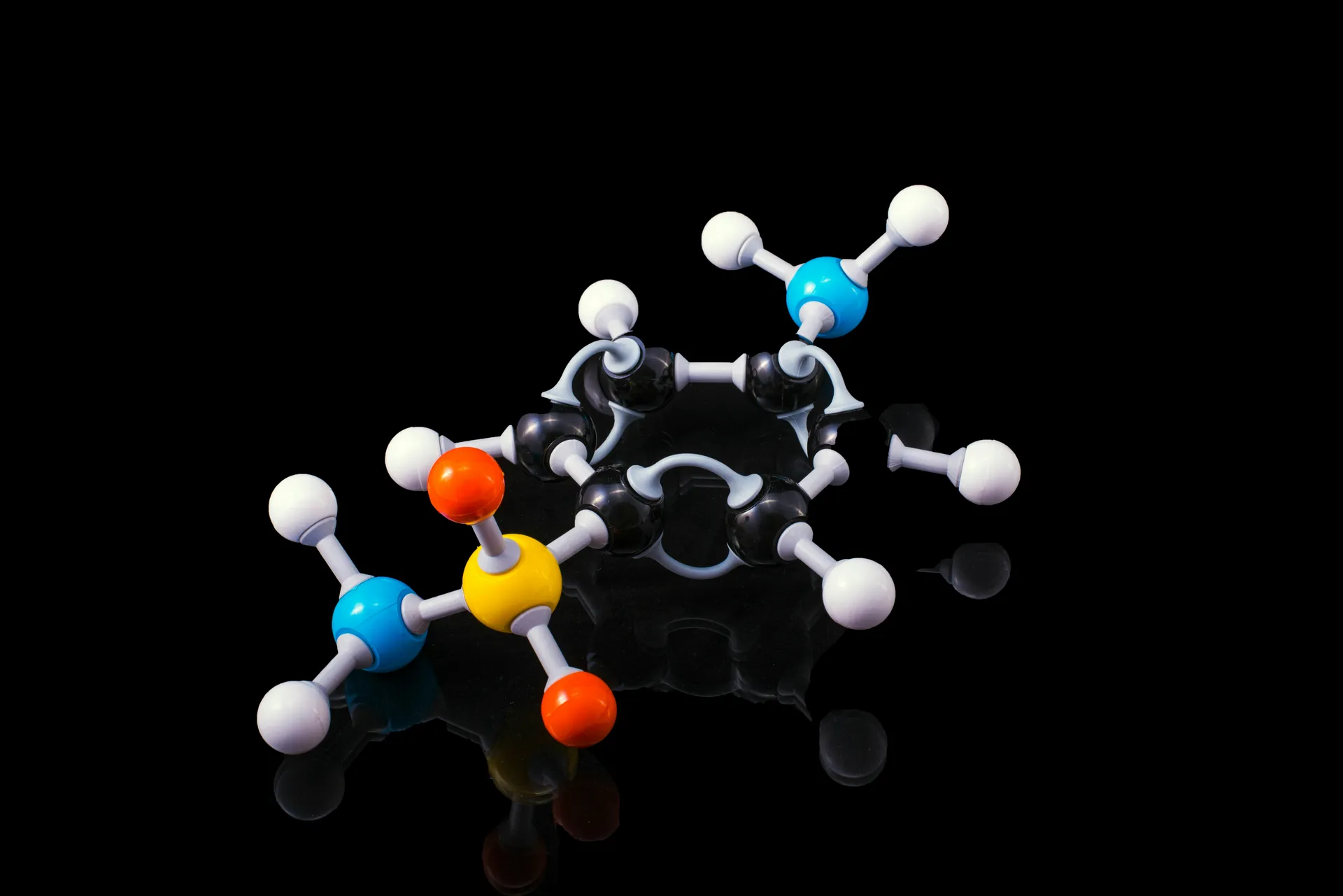
Small molecule
Small molecule Models
Molecular representation, generation, and property prediction
392 models in this category
What small molecule foundation models do
Small molecule foundation models learn representations of chemical structure from large libraries of molecules — millions of SMILES strings, molecular graphs, or 3D conformers — capturing the grammar of chemistry including bonds, functional groups, ring systems, and physicochemical properties. These representations transfer to downstream tasks including molecular property prediction, de novo generation, and drug-target interaction modeling. Models like ChemBERTa apply BERT-style language modeling to SMILES, while graph neural network approaches like GROVER and Uni-Mol learn from molecular graph topology and three-dimensional geometry.
Applications in drug discovery and molecular design
Molecular property prediction — ADMET properties, binding affinity, solubility, toxicity — is the workhorse application driving adoption of these models in early-stage drug discovery pipelines. De novo molecular generation using models like MolGPT enables the exploration of chemical space beyond what exists in known compound libraries, particularly useful for hit generation and scaffold hopping. Benchmarks like MoleculeNet and TDC (Therapeutics Data Commons) provide standardized evaluation across a wide range of prediction tasks, allowing direct comparison of model architectures and pretraining strategies.
Notable Models
Top-rated small molecule models from our evaluations
646259.3K413
Large-scale chemical language model trained on 1.1 billion SMILES strings using linear attention transformers for molecular property prediction.
Small molecule
86Openness
496—20
SMILES language model pretrained on 100M molecules, transferring to forward reaction prediction, retrosynthesis, molecular optimisation, and QSAR.
Small molecule
59Openness
De novo small molecule design for protein pockets, steering a discrete flow-matching generator with gradients from a frozen Boltz-2 affinity model.
Small moleculeProtein
21Openness
Molecular descriptor model that embeds compounds into a continuous 512-dimensional space by translating between equivalent chemical line notations.
Small molecule
69Openness
335—347
Structure-based drug design by SE(3)-equivariant diffusion over 3D atom coordinates and types, with the same frozen network scoring binding affinity.
Small moleculeProtein
85Openness
Frequently asked questions
What is a small molecule foundation model?
A small molecule foundation model is a neural network pretrained on large corpora of chemical structures — typically millions of molecules from databases like PubChem, ChEMBL, or ZINC — to learn general-purpose molecular representations. These representations support downstream tasks like property prediction, virtual screening, and molecular generation without task-specific training from scratch. ChemBERTa, MolGPT, and Uni-Mol are representative examples spanning different input representations.
How do small molecule models represent chemical structure?
There are three main representation strategies: SMILES-based models treat molecular structure as a sequence of characters and apply language modeling objectives; graph-based models operate on molecular graphs where atoms are nodes and bonds are edges; and geometry-aware models additionally encode three-dimensional atomic coordinates from conformers. Each approach has trade-offs — SMILES models benefit from scale and language model advances, while geometry-aware models capture steric and conformational information relevant to binding prediction.
Can small molecule foundation models replace docking in virtual screening?
In many practical scenarios, yes — particularly for early-stage triage of large compound libraries where docking throughput is limited by the cost of 3D pose generation. Foundation model-derived binding affinity predictors like those fine-tuned on BindingDB or ChEMBL can score millions of compounds per day with competitive accuracy on retrospective benchmarks. However, physics-based docking remains important for understanding binding modes and for cases where prospective generalization is required to genuinely novel scaffolds.
What is the TDC benchmark and why does it matter for small molecule models?
The Therapeutics Data Commons (TDC) is a standardized benchmark collection covering over 60 drug discovery prediction tasks — ADMET properties, drug-target interactions, and clinical outcome prediction — with unified data splits designed to test generalization rather than memorization. It has become a key reference point for comparing small molecule model performance because the splits are scaffold-based, meaning they test generalization to structurally dissimilar compounds rather than interpolation within known chemical families.