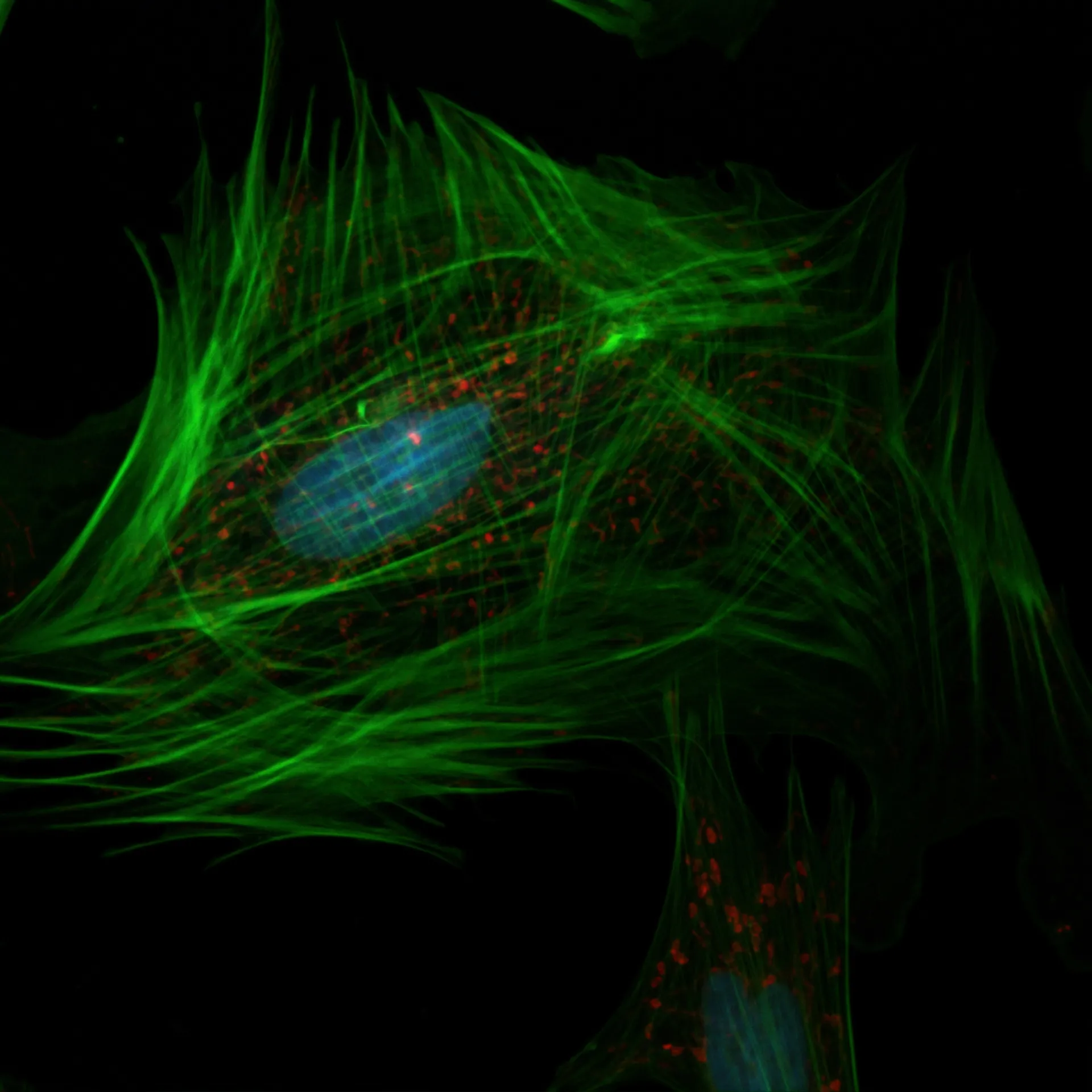
Imaging
Imaging Models
Microscopy, fluorescence imaging, and cryo-EM analysis
386 models in this category
What biological imaging foundation models do
Biological imaging foundation models are trained on large-scale microscopy datasets — spanning fluorescence confocal imaging, cryo-electron microscopy, cell painting, brightfield, and live-cell timelapse — to learn visual representations that generalize across instruments, imaging protocols, and specimen types. Models like Cellpose learn generalist cell and nucleus segmentation that transfers across cell lines and imaging conditions without retraining, while others focus on image restoration, super-resolution, or phenotypic profiling from high-content screening data. The defining feature of this class is pretraining that reduces the annotation burden historically required for each new imaging experiment.
Applications in microscopy and drug screening
Cell segmentation is the most widely adopted application, with Cellpose in particular becoming near-standard infrastructure for fluorescence microscopy analysis. Phenotypic profiling from cell painting assays — where cells are stained with a panel of dyes and imaged to capture morphological features — has been substantially advanced by foundation model embeddings that capture biological signal more efficiently than classical handcrafted features. Cryo-EM particle picking and 3D reconstruction represent a specialized but high-impact domain where deep learning has largely replaced manual curation, shortening the path from raw micrographs to solved structures.
Notable Models
Top-rated imaging models from our evaluations
3.7K—2.4K
Generalist deep learning algorithm for cell and nucleus instance segmentation using simulated diffusion flows, without per-dataset retraining.
Imaging
92Openness
1.7K—1.3K
Nucleus instance segmentation for fluorescence microscopy and H&E histology, predicting a star-convex polygon per pixel to separate crowded nuclei.
ImagingPathology
76Openness
1.2K—2.4K
Human-in-the-loop cell segmentation framework enabling custom model training from as few as 100-200 corrected annotations.
Imaging
59Openness
999122688
Self-supervised foundation model for retinal imaging, pretrained on 1.6 million unlabelled fundus and OCT scans to detect ocular and systemic disease.
ImagingPathology
30Openness
705158.3K137
Biomedical vision-language model trained contrastively on 15M PubMed Central figure-caption pairs for zero-shot classification, retrieval, and VQA.
Imaging
61Openness
698—2.3K
Pretrained 3D-ResNet backbones for volumetric medical image analysis, co-trained across eight CT and MRI segmentation datasets for transfer learning.
Imaging
75Openness
Frequently asked questions
What is a biological imaging foundation model?
A biological imaging foundation model is a neural network pretrained on large collections of biological images — microscopy, cryo-EM, histology, or cell painting — to learn visual representations that transfer across imaging tasks without task-specific training from scratch. These models enable cell segmentation, image restoration, phenotypic profiling, and structural reconstruction with reduced annotation requirements. Cellpose is among the most widely adopted examples for cell and nucleus segmentation.
How does Cellpose differ from a general image segmentation model?
Cellpose uses a gradient flow representation that is particularly well-suited to the circular, overlapping morphology of cells and nuclei, and it was pretrained on diverse microscopy images spanning many cell types and imaging modalities. General image segmentation models like SAM (Segment Anything Model) were trained predominantly on natural images and require adaptation or fine-tuning to perform well on microscopy data, where textures, boundaries, and object statistics differ substantially from everyday photographs.
What is cell painting and why are foundation models useful for it?
Cell painting is a high-content imaging assay where cells are stained with five to eight fluorescent dyes targeting distinct cellular compartments — nucleus, mitochondria, endoplasmic reticulum, actin — and imaged to produce a rich morphological profile. Foundation models trained on cell painting data can extract compact embeddings that capture drug mechanism of action, toxicity, and genetic perturbation effects more efficiently than classical feature extraction pipelines, enabling large-scale phenotypic screening.
Are cryo-EM processing tools considered foundation models?
Some cryo-EM tools — particularly neural network-based particle pickers and ab initio reconstruction approaches trained on large datasets of micrographs — fit the foundation model framing, though the field often uses different terminology. Models pretrained on diverse cryo-EM data that transfer to new specimens with minimal fine-tuning are tracked by bio.rodeo; classic algorithmic tools without a learned representation component are generally excluded.