Biosignals
Biosignals Models
Continuous physiological and wearable sensor time-series
156 models in this category
What biosignal foundation models do
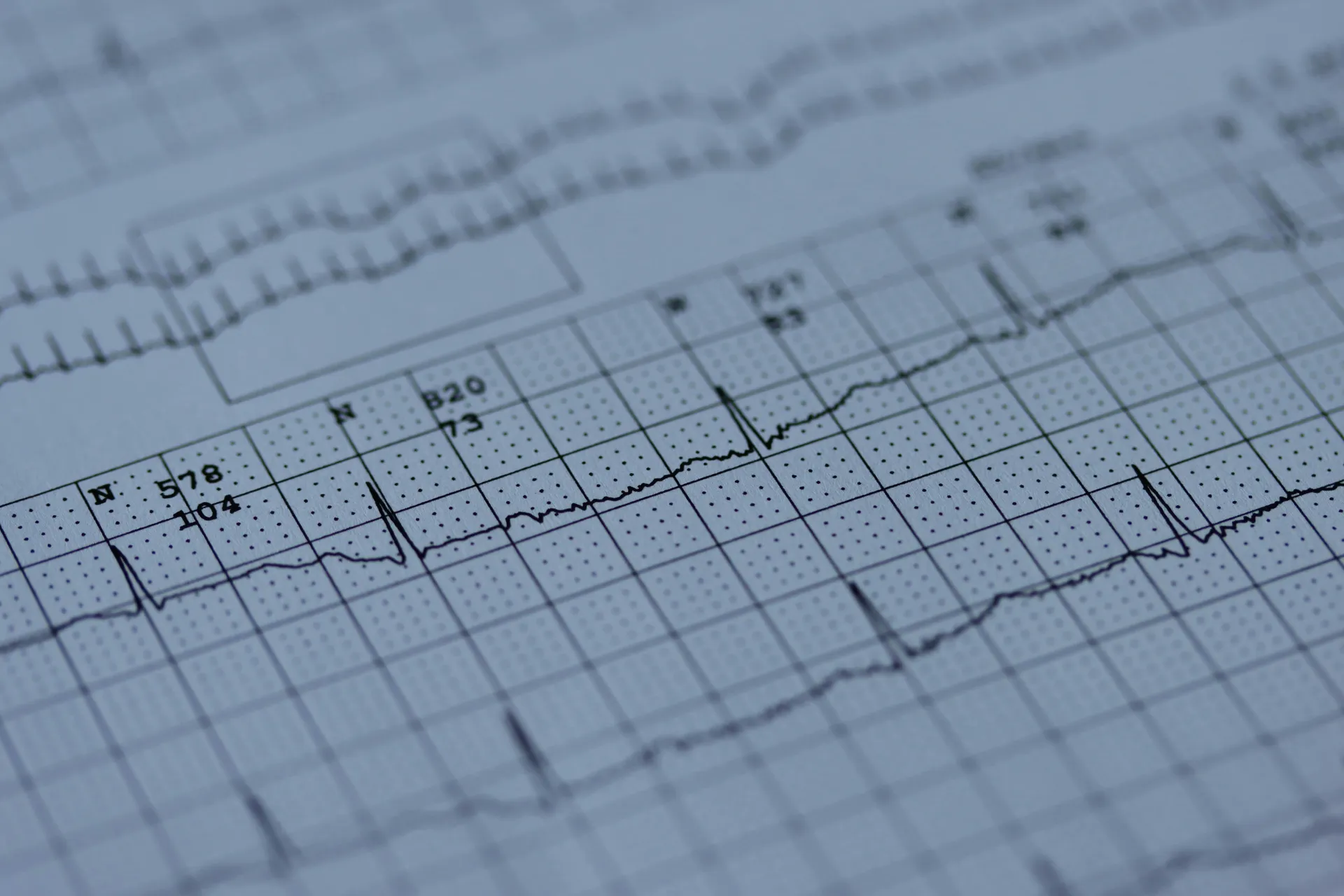
Biosignal foundation models learn from continuous physiological and wearable sensor time-series — electrocardiography (ECG), electroencephalography (EEG), photoplethysmography (PPG), continuous glucose monitoring (CGM), actigraphy, and related streams — capturing the temporal patterns underlying cardiac, neural, metabolic, and sleep dynamics. Pretraining on long, noisy, multi-channel recordings teaches these models to distinguish physiologically meaningful signal from instrumentation artifact, a task that has historically required extensive manual curation. As wearable devices make these signals increasingly ubiquitous, foundation models offer a path to scalable analysis that generalizes across devices and populations.
Applications: cardiac, neural, and metabolic monitoring
Arrhythmia detection from ECG and PPG is one of the most mature clinical applications, with deep learning models trained on large annotated ECG libraries like PTB-XL and MIMIC-IV achieving cardiologist-level performance on rhythm classification. Seizure prediction and sleep staging from EEG represent demanding temporal modeling tasks where pretrained representations have demonstrated strong transfer from large pretraining cohorts to smaller clinical datasets. Glucose forecasting from CGM time-series, important for insulin dosing in type 1 diabetes management, has seen increasing application of sequence models pretrained on large continuous monitoring datasets.
Notable Models
Top-rated biosignals models from our evaluations
452—665
EEG foundation model that learns transferable brain-signal representations with a vector-quantized tokenizer and masked transformer pretraining.
Biosignals
72Openness
39210K213
EEG foundation model pretrained on clinical recordings with a wav2vec 2.0-style contrastive task, transferring to BCI decoding and sleep staging.
Biosignals
33Openness
385—319
Sleep staging model that segments polysomnography from any single EEG and EOG channel pair, labelling stages at resolutions finer than 30 s epochs.
Biosignals
67Openness
227—167
Self-supervised CNN pretrained on 700,000 person-days of UK Biobank accelerometer data for human activity recognition across devices and cohorts.
Biosignals
28Openness
215—352
EEG foundation model for brain-computer interface decoding, factorizing self-attention into parallel spatial and temporal branches.
Biosignals
78Openness
138——
Self-supervised foundation model for wearable electrocardiograms, trained with participant-level contrastive learning on 141,000 participants.
Biosignals
5Openness
Frequently asked questions
What is a biosignal foundation model?
A biosignal foundation model is a neural network pretrained on large collections of continuous physiological recordings — ECG, EEG, PPG, CGM, or related wearable sensor streams — to learn representations of temporal patterns in physiology that transfer to clinical and monitoring tasks. These representations enable downstream applications like arrhythmia detection, seizure prediction, and sleep staging with less labeled data than training from scratch. The field is growing rapidly as wearable data becomes abundant.
What is PTB-XL and why is it important for ECG models?
PTB-XL is a large publicly available clinical ECG dataset containing over 21,000 12-lead recordings labeled with 71 ECG statements by two cardiologists. It has become a standard benchmark for ECG foundation models, enabling direct comparison of classification performance across rhythm, conduction, and morphology labels. Its public availability and expert-annotated labels make it one of the most important reference datasets for the biosignals field.
Can biosignal models generalize across different wearable devices?
Cross-device generalization is one of the central challenges: ECG recorded from a medical-grade 12-lead machine differs substantially from a single-lead smartwatch trace, and PPG quality varies dramatically by sensor hardware and placement. Models pretrained on diverse device types or fine-tuned with domain adaptation techniques generalize better, but significant performance gaps between device classes remain common in current literature. Rigorous cross-device evaluation is still the exception rather than the rule in published biosignal models.
How do biosignal foundation models handle missing or noisy data?
Most current approaches use masking-based pretraining objectives — analogous to BERT's masked language model — where random segments of the input time-series are masked and the model learns to reconstruct them. This naturally forces robustness to missing segments and teaches the model to use global temporal context to infer local signal. At inference time, models trained this way tolerate gaps and motion artifacts better than supervised models trained only on clean recordings.