Pathology
Pathology Models
Histology and tissue imaging analysis
249 models in this category
What pathology foundation models do
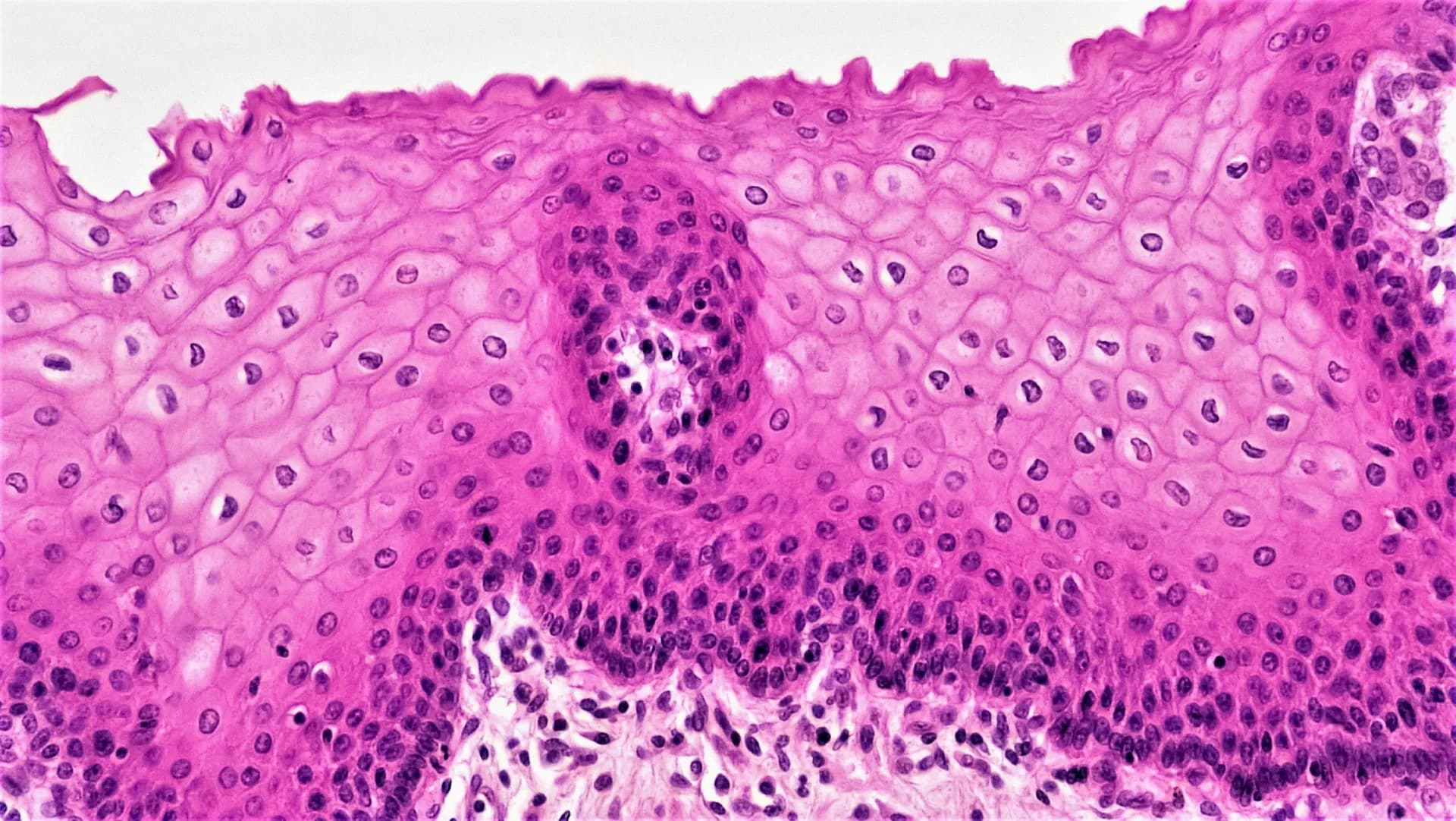
Computational pathology foundation models apply vision transformers and self-supervised learning to whole-slide histology images, learning representations of tissue architecture, cell morphology, and spatial patterns at a scale and consistency no human pathologist can match across a full slide. These models — including UNI, Virchow, and CONCH — are pretrained on millions of histopathology image patches from diverse tissue types, giving them broad generalization across cancer subtypes, staining protocols, and scanning hardware. The self-supervised pretraining strategy means these representations transfer to new tasks without requiring large sets of expert-annotated slides.
Applications: grading, biomarker prediction, and survival analysis
Cancer grading and subtype classification are the most mature applications, with several models matching or exceeding specialist pathologist agreement on standard grading tasks for prostate, colorectal, and breast cancers. Biomarker prediction from H&E stains — inferring genomic features like microsatellite instability, BRCA mutation status, or HER2 amplification directly from routine histology without additional molecular testing — has moved from research into clinical validation studies. Survival analysis and treatment response prediction represent the frontier, where models like CONCH combine pathology image features with clinical text to improve prognostic accuracy.
Notable Models
Top-rated pathology models from our evaluations
2.8K5158
Attention-based multiple instance learning heads for whole-slide pathology, pretrained on a 108-way pan-cancer slide classification task.
Pathology
26Openness
2K6.9K2.2K
Biomedical vision-language assistant for question answering on radiology and pathology images, adapted from LLaVA on PubMed Central captions.
PathologyLanguage model
27Openness
1.8K44.8K776
Computational pathology foundation model (ViT-L/16, DINOv2) pretrained on over 100 million H&E tiles from more than 100,000 whole-slide images.
Pathology
46Openness
1.8K54.2K787
Histopathology foundation model pretrained on 200 million H&E and immunohistochemistry tiles from more than 350,000 whole-slide images.
Pathology
11Openness
1.1K15.1K538
Histopathology vision-language foundation model pretrained on 1.17 million image-caption pairs with contrastive and captioning objectives.
PathologyImaging
44Openness
1.1K47K637
Whole-slide histopathology foundation model pretrained on 1.3 billion image tiles from 171,189 clinical slides spanning 31 tissue types.
Pathology
58Openness
Frequently asked questions
What is a computational pathology foundation model?
A computational pathology foundation model is a vision transformer or similar neural network pretrained on large collections of histopathology images — typically whole-slide images or tiles from H&E, IHC, or other stained tissue sections — to learn visual representations that generalize across tissue types, cancer subtypes, and clinical tasks. These models support downstream applications including cancer grading, biomarker prediction, and survival analysis. UNI, Virchow, and CONCH are well-known examples from academic and industry research groups.
How are pathology foundation models trained?
Most current models use self-supervised learning — typically masked image modeling or contrastive objectives like DINO or SimCLR — on hundreds of thousands to millions of image patches sampled from whole-slide images. This avoids the need for dense pixel-level annotations, which are expensive and slow to produce in pathology. Pretraining on large, diverse slide collections covering many tissue types and diseases produces more generalizable representations than models trained on single-cancer or single-institution datasets.
Can pathology foundation models replace human pathologists?
Not in the general case, and that is not the current goal. These models are designed to augment pathologist workflows — handling high-volume screening tasks, flagging slides for review, and quantifying features that are difficult for humans to measure consistently at scale. In specific, well-defined tasks like CAMELYON lymph node metastasis detection, AI models have demonstrated pathologist-level performance in controlled benchmarks, but deployment in clinical practice requires prospective validation and regulatory approval.
What makes pathology models different from general vision models?
Histopathology images have a highly specific statistical structure — gigapixel whole-slide images processed at multiple magnifications, with diagnostic signals distributed across many small regions rather than concentrated in a single salient object. Effective pathology models must aggregate information across spatial scales and tissue regions, making multi-resolution architectures and efficient attention mechanisms particularly important. Pretraining on general image datasets like ImageNet provides some transfer, but models pretrained specifically on pathology images consistently outperform them on histopathology benchmarks.